Digital Investments
Introducing Digital Investments, our new self-directed investment platform.

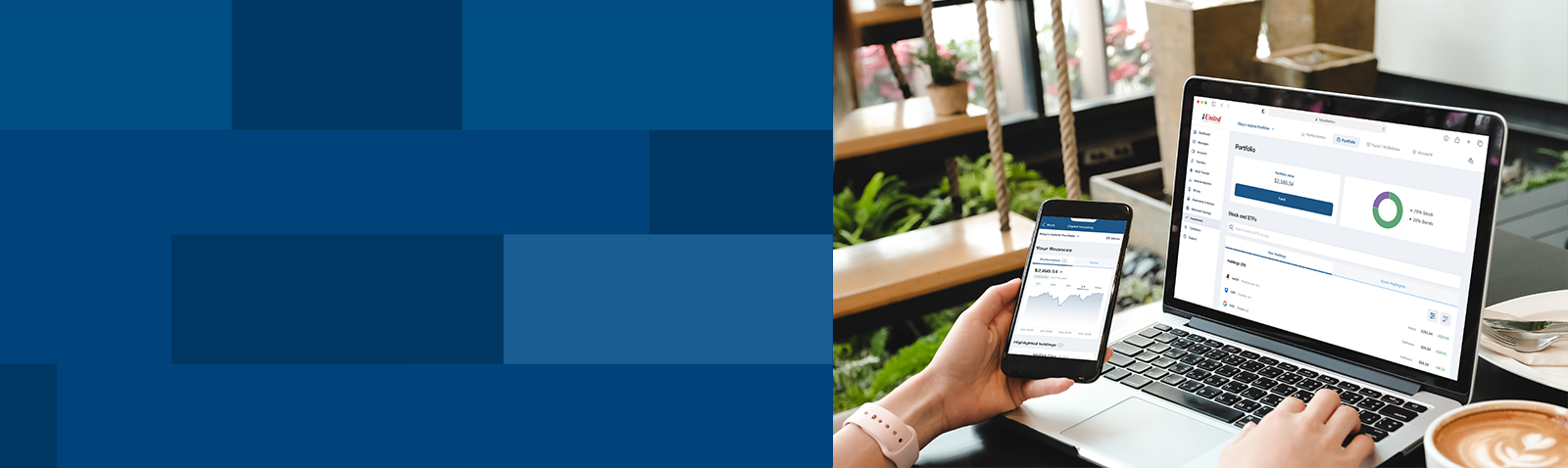
New to Investing? We'll Give You $10 to Start.
You don't need investing experience to get started. Eko walks you through a few simple questions to help you understand your options and build a portfolio personalized to you. Plus for a limited time, we'll give you $10 to help you get started with Digital Investments. Log in to online or mobile banking and take your first steps toward your investing goals.

Start with as little as $10
You don't need a large amount of money to begin investing toward your future.

Get a personalized portfolio
Answer a few questions about your goals and risk tolerance, and Eko will recommend a portfolio that fits you.

Choose what matters to you
Personalize your portfolio based on your interests and investment preferences.

An easy-to-use experience
Our Digital Investment experience helps simplify investing, so you can get started without having to be an expert.

Keep it all in one place
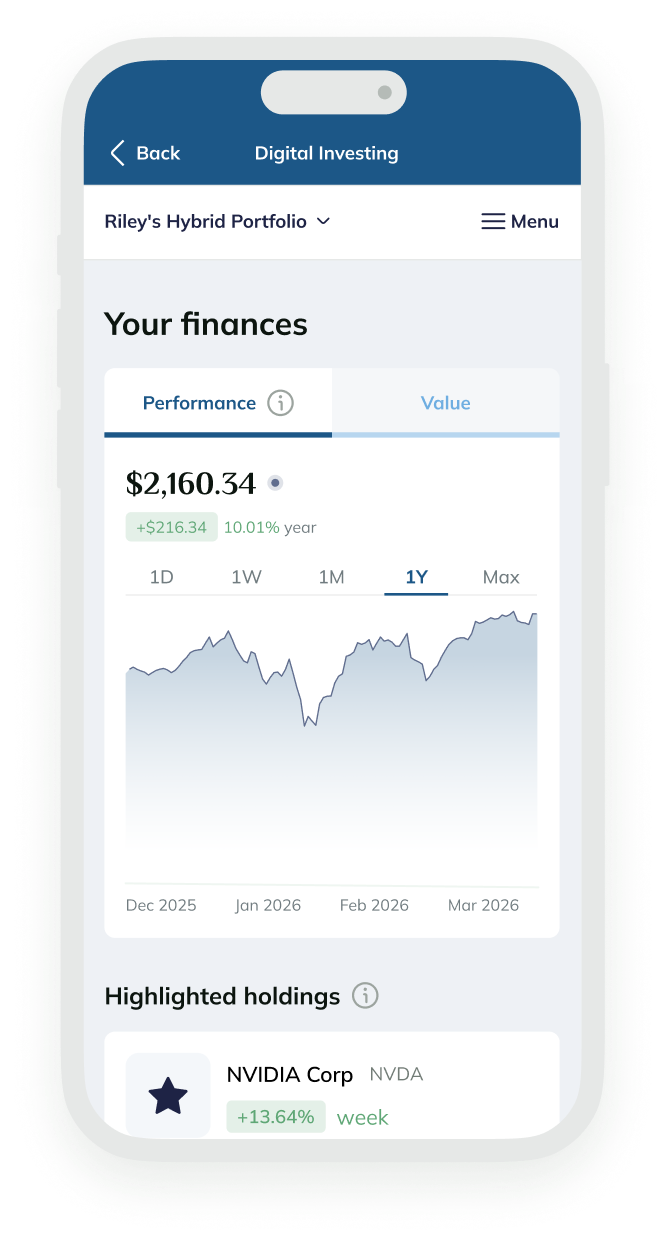
Access and manage your investments conveniently through your online and mobile banking.
Stocks represent ownership in a company, while bonds are debt securities issued by corporations or governments. Stockholders have an equity stake and may benefit from growth and profitability, while bondholders are lenders and receive fixed interest payments over time. Bonds are considered safer than stocks, but generally have a lower return.
An exchange-traded fund (ETF) is like a basket that holds different investments, such as stocks or bonds. It trades on stock exchanges like a single stock. ETFs offer easy access to various markets and are often less expensive than mutual funds, which makes them a popular choice for investors looking to diversify.
Stock investing involves risks such as market volatility, potential loss of capital, and company-specific risks. The value of stocks can fluctuate based on economic conditions, company performance, industry trends, and other factors.
Yes. You can pick from pre-built portfolios, hybrid portfolios and self-directed portfolios, and hold as many portfolios as you like simultaneously.
What are the costs?
Eko charges an annual management fee of 0.5% based on the value of assets in the Investment Account. For example, with $1,000 in the account the fee is $5 per year. The fee is charged monthly in arrears and deducted automatically, so nothing needs to be done to pay it.
Charges happen at the end of every month. Eko automatically sell a small piece of the portfolio to cover the management fee, equal to 1/12 of the annual fee.
How do I fund my portfolio?
Go to ‘Fund/Withdraw’ and select a funding amount, then select your checking account. This can be an already-connected credit union account, or an account at a third-party financial institution. For third-party institutions, Eko uses Plaid.